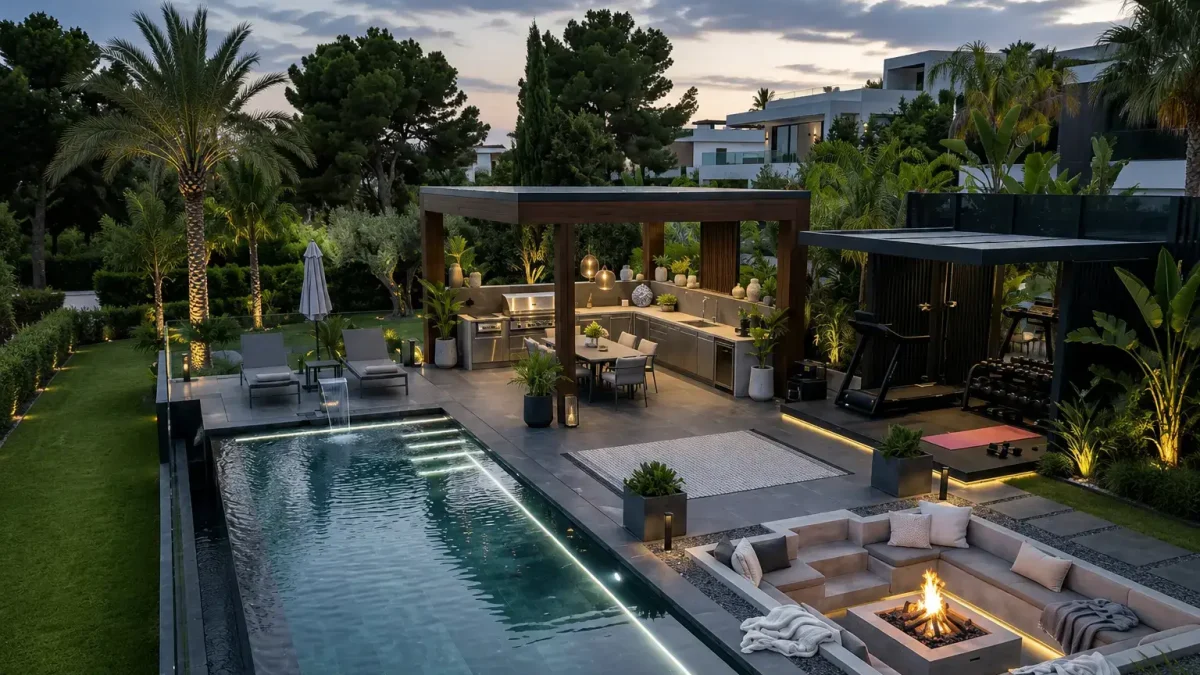
Your garden should feel like a natural extension of your home. The garden should provide shade on warm afternoons, provide a comfortable place to gather in the evening, and provide a peaceful retreat from the bustle of city life.
Dubai’s outdoor spaces require more than just choosing attractive plants. The effects of intense sunlight, limited rainfall, sandy soil, privacy requirements, and regular maintenance must all be considered from the very beginning. It is important that the layout, the materials, the planting, the irrigation, the furniture, and the lighting all work together.
By working with a professional landscape design company in Dubai, you can turn these practical requirements into a refined outdoor environment. Dubai’s most successful garden design ideas integrate climate-conscious planning with elegant materials, balanced proportions, and features that reflect the property’s architecture.
InteriorItalia approaches outdoor design with the same level of detail as luxury interiors. The goal is not simply to fill an empty garden. This is about creating a timeless, functional, and personal outdoor living experience.
Table of Contents:
1: Why Thoughtful Garden Design Matters in Dubai
2: 15 Garden Design Ideas for Dubai Homes
3: How to Select the Right Garden Style
4: Why Work with a Professional Landscape Designer?
Why Thoughtful Garden Design Matters in Dubai
Villa living in Dubai involves a lot of outdoor space. Well-planned gardens can offer additional areas for dining, entertaining, relaxing, exercising, or spending time with family.
In addition, it can improve the property’s first impression. Landscape plants, clean pathways, architectural lighting, and well-proportioned outdoor furniture create a sense of completeness and professionalism.
Beauty alone is not enough. Dubai gardens must also adapt to local conditions. Instead of being added later, water-efficient irrigation, appropriate planting, durable finishes, shaded seating, and easy maintenance should be part of the original design.
As part of its environmental effort, Dubai Municipality promotes sustainable landscaping, responsible irrigation, efficient space use, and climate-appropriate plantings.
15 Garden Design Ideas for Dubai Homes
Let’s find the list.
- Italian-Inspired Minimalist Garden
- Indoor–Outdoor Connected Garden
- Contemporary Pergola with Outdoor Lounge
- Mediterranean Planting Garden
- Garden with Sculptural Focal Point
- Luxury Water Feature Garden
- Layered Outdoor Lighting Garden
- Swimming Pool Framed with Landscaping
- Functional Zoned Garden
- Privacy Screening Garden
- Vertical Garden
- Outdoor Dining & Kitchen Garden
- Premium Hardscape Garden
- Sustainable Irrigation & Planting Garden
- Bespoke Outdoor Furniture Garden
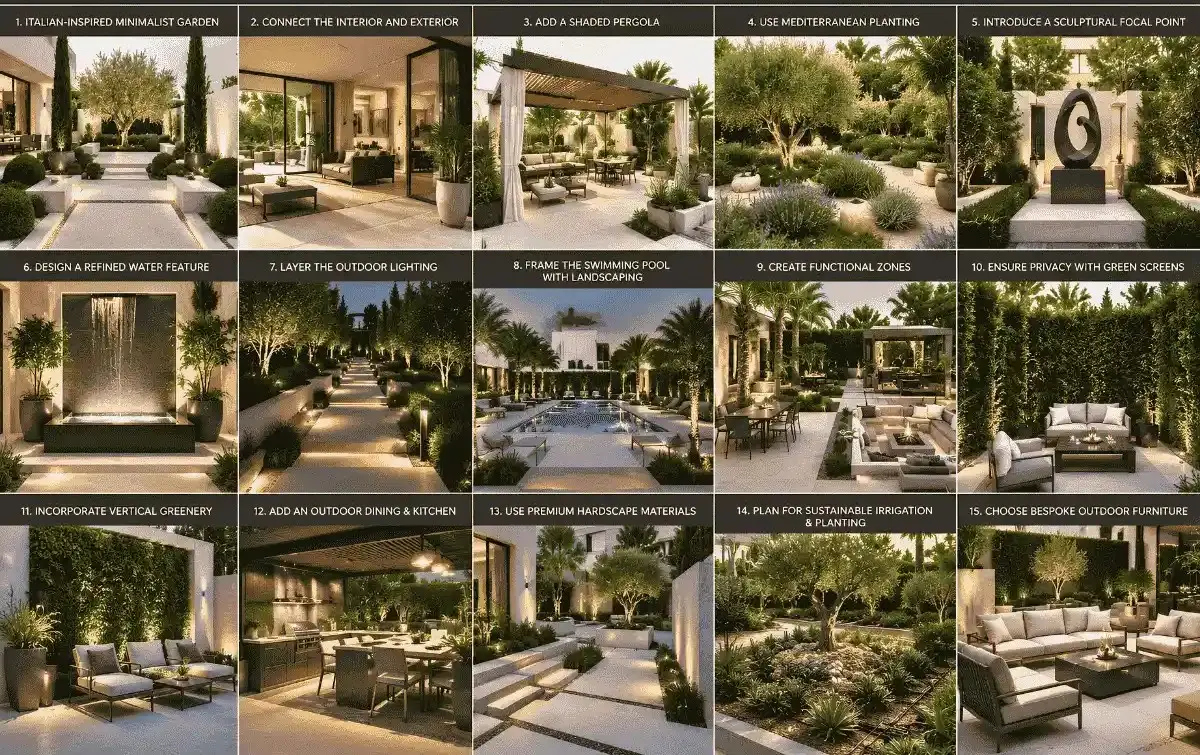
- Create an Italian-Inspired Minimalist Garden
Instead of excessive decoration, Italian-inspired outdoor designs often emphasize proportion, symmetry, and carefully chosen materials.
Make use of large-format stone tiles, structured planters, sculpted greenery, and a limited palette of colours. The combination of cream limestone, gray porcelain, natural wood, and dark metal details can create a calm and sophisticated environment.
Don’t fill every corner with furniture, plants, or architectural features. Negative space gives each element greater visual importance, enhancing the sense of generosity in smaller gardens.
The minimalist landscape works particularly well in contemporary villas, where clean architectural lines complement the garden.
- Connect the Interior and Exterior
In Dubai, creating a visual connection between indoor and outdoor spaces is one of the strongest garden design ideas.
Repetition of interior colours, textures, or materials outside can enhance the transition. Warm timber, neutral stone, and cream fabrics can be carried into a terrace using similar finishes.
A garden can feel like another room of the house with large sliding doors, aligned flooring, coordinated furniture, and uninterrupted sightlines.
In this way, natural light, architecture, furniture, and landscaping can all work together to create a more integrated design.
- Add a Shaded Pergola
A pergola provides shade while adding an architectural element to the garden. An outdoor dining area, lounge, poolside seating area, or private reading corner can be defined by it.
If you are planning to build a contemporary villa, consider an aluminium pergola with a retractable roof. It is possible to introduce timber-effect finishes, fabric curtains, climbing plants, and textured stone for a more Mediterranean feel.
The structure is more useful throughout the year thanks to ceiling fans, concealed lighting, weather-resistant curtains, and comfortable furniture.
The pergola should be positioned according to sunlight, privacy, views, and its relationship to the house.
- Use Mediterranean Planting
The Mediterranean Garden design blends naturally with Dubai’s warm climate. There are many plants that can create greenery without overwhelming the landscape, including olive trees, bougainvillea, rosemary, jasmine, palms, ornamental grasses, and succulents.
Plants of different heights should be combined. Structure can be provided by a feature tree, volume can be added by medium-sized shrubs, and paths and walls can be softened by low-growing plants.
Planters made of terracotta, pale stone, gravel, and textured plaster can complete the look.
Selection of plants should still be based on the amount of sunlight, irrigation requirements, soil conditions, and maintenance available on the property.
- Introduce a Sculptural Focal Point
When a garden has a clear focal point, it becomes more memorable. Depending on the design, this could be a contemporary sculpture, an artistic fountain, a feature tree, a stone installation, or a custom-designed planter.
The focal point should be visible from an important location, such as the living room, entrance, dining terrace, or main garden path.
Do not place several statement pieces too close to each other. One carefully selected piece of artwork usually has more impact than multiple unrelated decorations.
InteriorItalia’s connection between landscape design and art advisory makes sculpture a natural element within a more curated outdoor concept.
- Design a Refined Water Feature
An outdoor environment can be calming and relaxing when water is present.
It may suit a minimalist villa to have a narrow reflecting pool, while a Mediterranean or classical garden may benefit from a stone fountain. When space is limited, wall-mounted water features are useful.
It is important to keep the design proportionate to the garden. The size of a feature can dominate the setting, while the size of a smaller feature can make it feel disjointed.
The water feature should be placed where it can be enjoyed from both indoor and outdoor seating areas. It is also important to plan for pumps, waterproofing, cleaning access, evaporation, and ongoing maintenance.
- Layer the Outdoor Lighting
It is important to ensure that the garden lighting makes the space safe as well as visually appealing without creating an excessive amount of brightness.
Pathway lights can be employed for circulation, wall lights for entrances, concealed strip lighting beneath steps and seating, and focused uplights for trees, sculptures, or textured surfaces.
Lights should be arranged in layers. In some fittings, practical illumination is provided, while in others, depth and atmosphere are created.
In most cases, warm lighting creates a more welcoming residential environment than harsh white lighting. LED fittings can also save electricity and require fewer replacements.
Rather than installing lighting after everything else is finished, lighting schemes should be designed with the landscape in mind.
- Frame the Swimming Pool with Landscaping
In order for a swimming pool to feel integrated into a garden, it should not appear as a separate structure.
To frame the pool, use plantings, decking, shaded loungers, outdoor showers, and carefully placed lighting. The materials should be slip-resistant, heat-resistant, and suitable for constant exposure to water.
Planting tall can enhance privacy, while planting low can preserve important views. Place plants that drop excessive leaves away from water.
A clean border, comfortable circulation space, and coordinated furniture can give the pool area the appearance of a private resort.
- Divide the Garden into Functional Zones
An open garden may look spacious, but it doesn’t always support daily life well. Each part of the area has a clear purpose when it is divided into zones.
The following might be included in a villa garden:
- An outdoor dining area
- A shaded lounge
- A swimming pool
- A children’s play space
- A lawn or open activity area
- A quiet garden corner
There is no need for solid walls in the zones. A subtle separation can be achieved with changes in flooring, planting, lighting, pergolas, steps, and furniture.
It is essential to have good circulation. Furniture arrangements should not prevent people from moving between areas comfortably.
- Improve Privacy with Elegant Screening
Residential garden design in Dubai emphasizes privacy, particularly for villas near neighboring properties.
By using decorative screens, layering plantings, pergola curtains, textured boundary walls, and carefully placed trees, direct views can be reduced without enclosing the garden.
A laser-cut metal screen can create an architectural appearance, whereas timber-effect panels add warmth to a room. By planting in front of a screen, its visual weight is softened.
Privacy solutions should be planned based on the viewing angles from nearby windows and upper floors. There may not be enough privacy from a neighboring balcony if a screen operates at ground level.
- Use Vertical Gardens in Compact Areas
When floor space is limited, vertical gardens can be used to introduce greenery.
They are particularly effective in courtyards, balconies, entrances, narrow side passages, and small townhouse gardens. You can also use a living wall to soften a plain boundary or provide a green backdrop behind outdoor seating.
You can use structured wall planters filled with a limited selection of plants for a lower-maintenance solution. Automated irrigation can help distribute water consistently.
The supporting wall, drainage, waterproofing, sunlight, plant access, and future maintenance must be considered before installation.
- Create an Outdoor Dining or Kitchen Area
An outdoor dining space that is designed as a complete environment rather than simply furnished with tables makes dining outside more enjoyable.
The dining area should be located close to the indoor kitchen so that serving is convenient. Depending on the frequency of use, add shade, ventilation, lighting, and storage.
Larger gardens may include a barbecue, preparation counter, sink, refrigerator, or pizza oven. It is important to choose materials that are durable, easy to clean, and suitable for outdoor use.
Establish an atmosphere that works for both family meals and formal entertaining by using comfortable chairs, a proportional table, and soft landscape lighting.
- Choose Durable Hardscape Materials
Landscape hardscape includes paving, pathways, walls, steps, edging, decks, and other constructed elements.
A garden’s framework is created by these surfaces, so they must be of high quality and installed properly. It is important to choose materials that can withstand strong sunlight, moisture, dust, and temperature changes.
It is possible to use porcelain tiles, natural stone, treated timber alternatives, gravel, and decorative concrete depending on the design.
It is also important that the finishes chosen complement the building. The garden can feel fragmented if there are too many unrelated materials. It is usually more effective to use a smaller palette, repeated consistently, if you want to achieve a more refined outcome.
- Plan Sustainable Irrigation and Planting
The water consumption of an attractive garden should not be excessive.
Plants should be grouped according to their watering needs. Water shrubs and planted beds with drip irrigation, check for leaks regularly, and adjust watering based on the season.
To reduce water loss through evaporation, DEWA recommends watering gardens during cooler periods.
Further moisture loss can be reduced by mulch, shaded soil, suitable ground cover, and climate-conscious plants.
A sustainable garden does not have to look dry or empty. While using resources more responsibly, it can remain green, layered, and visually appealing.
- Select Bespoke Outdoor Furniture
The furniture in the garden determines how people use it. Landscape design should consider its scale, placement, comfort, and materials.
A large piece of furniture can overwhelm a small terrace, while a small piece may seem lost in an expansive villa garden. Before selecting sofas, dining tables, loungers, or side tables, measure the circulation space.
Custom furniture allows for greater control over dimensions, finishes, fabrics, and storage options. In addition to taking advantage of corners or boundary walls, built-in seating can also be an effective solution.
Outdoor fabrics should resist fading and moisture. Cushions and accessories can introduce colour without permanently changing the garden’s material palette.
How to Select the Right Garden Style
The style of a garden should reflect the architecture and lifestyle of its users.
Contemporary villas may be complemented by minimalist landscaping, sculptural plants, large-format paving, and architectural lighting. It may be beneficial to plant olive trees, build textured walls, and use warm stone in a Mediterranean-inspired home.
Families may prioritize lawns, play areas, shaded dining areas, and durable surfaces. Outdoor kitchens, formal seating, and dramatic lighting may be preferred by homeowners who entertain regularly.
Before finalizing a concept, consider:
- How many people normally use the garden
- Which areas receive direct sunlight
- How much maintenance is practical?
- Whether privacy is required
- How the garden appears from inside
- Which features are most important?
- Whether the design suits the architecture
The goal is not to follow every outdoor trend. It is to create a setting that feels appropriate for the property and remains enjoyable over time.
Why Work with a Professional Landscape Designer?
Landscape design combines architecture, planting, engineering, lighting, irrigation, furniture, and art.
An experienced landscape designer can study the site, plan the layout, recommend plants, and prepare drawings before work begins. Before installation, three-dimensional visualisation can also help clients understand proportions and make informed decisions.
As a result, there is less risk of poorly positioned features, unsuitable materials, drainage problems, or disconnected design choices.
Residential and commercial projects are handled by InteriorItalia, which provides landscape architecture, master planning, concept development, 3D visualisation, outdoor structure design, landscape lighting, and artwork selection.